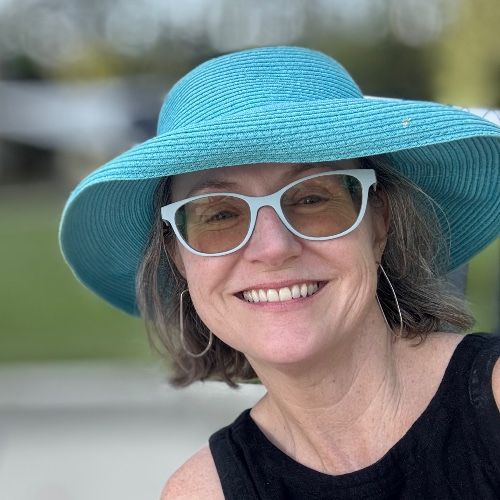
Country Fried Rock 1214: Angela Easterling From Carolina Roots to French Tunes
Summary
From 2012: Angela Easterling dives into the delightful chaos of her creative journey, showcasing how her latest album, a unique blend of Americana and French flair, came to be. She shares the quirky backstory of translating her songs and the unexpected challenges that arose, like accidentally asking a food truck for apple juice instead of directions in Paris. Angela reflects on her evolution as an artist, tracing her roots back to her childhood and her diverse musical influences, all while keeping it real with a touch of southern charm. The conversation takes a humorous turn as they discuss the intricacies of language and the pitfalls of translation, all while celebrating the growth that comes from stepping out of one’s comfort zone. With a laid-back vibe, this episode encapsulates the joy of music and the serendipitous moments that inspire creativity, making it a must-listen for anyone who appreciates the art of storytelling through song.
Show Notes
Angela Easterling is back on Country Fried Rock, sharing the laid-back journey of her musical career that’s taken her from the quiet corners of South Carolina to the buzzing streets of Los Angeles. Here's a breakdown of the conversation:
- Latest Project: Angela’s new album is a French surprise! Despite fans initially raising an eyebrow at the idea of an Americana album in French, she’s fully embracing the unexpected and showing off her linguistic chops.
- Creative Process: The album’s inspiration came from her collaboration with Mahayan, a French professor. Together, they took Angela’s song "One Microphone" and turned it into "Unmie Coffin," and that was just the beginning!
- Lost in Translation: Angela shares some hilarious translation mishaps, including a memorable moment where she accidentally ended up asking for apple juice in Paris. Proof that even seasoned artists can find themselves in some funny situations.
- Reconnecting with Roots: After bouncing around LA and Boston, Angela moved back to South Carolina, where she tapped into her country roots in a way she hadn’t before. This move has brought a new depth to her writing and to her connection with country music.
- Full Circle Moment: By embracing her country influences, Angela feels she’s found her truest sound yet, and it’s a reminder that sometimes, going home leads to the best discoveries.
The episode is packed with laughter, inspiration, and a whole lot of musical heart.
Chapters
- 00:09 - Introduction to Angela Easterling
- 04:34 - Challenges of Translating Song Lyrics
- 07:18 - The Journey into Music
- 13:40 - Reconnecting with Roots: The Journey Back to South Carolina
- 20:00 - The Transition to Music Production
- 26:12 - The Evolution of a Musician: From Local Roots to National Stage
Takeaways
- Angela Easterling's journey into music reflects a serendipitous blend of personal experiences and cultural influences.
- The creative process of translating songs into French illustrates a unique challenge that enhances songwriting skills.
- Returning to South Carolina reconnected Angela with her roots, significantly shaping her musical direction and identity.
- Working with friends and collaborators in a supportive environment fosters creativity and experimentation in Angela's music.
Links
- REMINDER: IGNORE ALL LINKS OR EVENTS MENTIONED IN THIS EPISODE FROM 2012
- Angela Easterling
- You may also enjoy this conversation from 2015 with Mic Harrison
- Throw a few in our Tip Jar!
Mentioned in this Episode
- Furman University
- Nashville
Recommended If You Like
country music, Americana music, Angela Easterling, songwriting inspiration, French music album, creative collaboration, Nashville music scene, South Carolina musicians, music production, Blacktop Road album, musical theater influence, folk music scene, open mic performances, country music roots, touring musicians, indie music, songwriting process, bilingual music, music career development, music industry challenges
Transcript
Speaker A
Welcome to Country Fried Rock, where we talk with musicians to find out what inspires their creativity. Country Fried Rock music uncovered. Today on Country Fried Rock, we're talking with musician Angela Easterling. Thanks so much for being with us.
Speaker B
Oh, my pleasure. Thanks for having me.
Speaker A
Absolutely. Well, this is a pleasure.
I really enjoyed your record before your most recent one, Beguiler, and then you posted that you were doing a record in French, and I thought, huh, probably.
Speaker B
What most people thought.
Speaker A
It's a great record, though, now that I've heard it. So I do want to get to that of how on earth this came about.
Speaker B
Yeah, well, my second album, Blacktop Road, which was released in 2009, had one song on there that was a bonus track that appeared in both English and French. In English, it was one microphone. In French, it was Unmie Coffin.
And basically that came about because my good friend here in South Carolina, Mahayan Bessie, she's from France and she's a French professor at a college here at Furman University. And she and I are really good friends. And we translated that one song because I thought that that song might be kind of interesting to do in French.
I kind of had the idea to do that song in French, and so, you know, just to kind of see if it would work. And we translated it and it actually turned out really good.
Once people heard it, they would ask me, was that song originally in French or was it originally in English? Because it. It seemed kind of seamless. And we just enjoyed working together so much.
And it's interesting for me because I've never worked with a co writer. All of my songs I've written by myself. This was really, like the first time I've ever collaborated with someone.
So we worked together to come up with a whole album's worth of songs. And then I kind of had it on the side. You know, I was just thinking, well, when I get some time, I'll do this project.
And lo and behold, I was looking at a 2012 calendar about last October of 2011, and I saw that this year, Valentine's Day was on a Tuesday, which is, you know, the day that albums are released, Tuesday on Valentine's Day. And I realized, you know, only chance I would have to release an album on Valentine's Day if I did it right now.
So I was like, oh, you got to do the CD really quick. And so I didn't even go in the studio until the day after Thanksgiving. Wow. And, yeah. And usually, you know, it's at least six months from start.
You know, just everything that goes into an album. So all of that was really sped up. I started recording it the day after Thanksgiving.
We worked through it throughout December, and I was even sick while we were recording. I had bronchitis. But lo and behold, we went to Nashville and mastered it on January 2nd, and it was done.
And I got it done in that rapid of time and released it. And, you know, it's just kind of a side project for me. It's something I wanted to see if I could do, you know, something that I thought would be fun.
It was a real challenge, you know, to try to, you know, express yourself in another language, singing and get album pronunciation right and everything. So, I mean, I don't know if people are going to catch on to this album. I don't know.
You know, a lot of people were kind of like, americana album in French, okay. But I think it's just an interesting thing to do.
I think it's, you know, anytime you work on writing in any kind of way, it only helps you as a writer. I think it's going to help strengthen that writing muscle for me for when I go back to writing in English.
And I just hope that, you know, it seems like so far people are liking it and getting into it, and so, you know, we'll see what happens. But mainly this was just something that I did for fun. When I was in Paris, I was looking for Jeu de Palme, which is a famous park there.
And I was looking all over. I couldn't find it near the Champs Elysees. And I was going around asking people, and they kept pointing me in direction, direction, direction.
And finally I realized they were pointing me to, like, a food truck. Figured, oh, well, they must. I must be supposed to ask the food truck guy where it is. So I go up to him and I ask him, ouai, jeu de paume.
And he hands me a can of juice, Jus de palm. Jus de palm. And he's like, oui, jus de palm. Apple juice.
Speaker A
Apple juice. That's hysterical.
Speaker B
All these people thought I was going around all over the Champs Elysees asking people for apple juice. My friend Marianne actually tells her class about that. I had a lot of funny mistakes too, too, just when writing, you know.
And some of them I couldn't repeat on the radio, right?
And I thank goodness for Marianne, because I would have said some really bad things in this album, you know, like one of them that I probably could say in the song bienna May, I said, je te sans partout. And to me, I was trying to say, I feel you everywhere. Supposed to be really romantic. I feel you everywhere.
And Marianne says, no, really, what you're saying when you say that is, I smell you everywhere. So, you know, so it's good to have a. It's good to have a French speaker working with you if you're gonna do something like that.
Unless you're trying to put out a comedy album.
Speaker A
But, you know, there's. There are problems in translation like that. Like, je tamien means I like you. Doesn't mean I love you a ton.
But if you were to translate literally, it wouldn't come across.
Speaker B
That's right. And other things, too. Like in French, you wouldn't say, I feel blue, or this makes me feel blue. There's no feeling of being blue right there.
So, like, you know, things like that. There was another one in a song. I had this song called jouer, which means toy.
And I have a line where I wanted to say, you pushed every button to see what I could do, because the guy treats the girl like a toy and throws her away. So I had a line that says, you push every button to see what I could do. And so I said bouton. But in French, they don't use, like, bouton button.
That's like a button on your code. They don't say a button like on a remote control. They say command. They do say bouton for pimple, for acne.
I had said, you pushed my pimples to see what I could do. Yeah.
Speaker A
And there's no way you could have known that.
Speaker B
No way. No way. I mean, maybe if I had lived there, which I. And I traveled there a lot. But, you know, little things like that.
I mean, you can know the vocabulary word, but not really knowing how it's used in the common vernacular.
Speaker A
Right.
Speaker B
And then another thing, too, is just. You don't want it to sound like a translation. You know, I didn't want these things to sound. I wanted it to sound really natural.
I didn't want it to sound forced. And sometimes, you know, there's a lot of words in English you can cut out. We don't have to say the all the time.
We don't have to say an article, but you have to in French. And so that presented a challenge, too, with timing things out and having things fit the phrasing of the song.
So there was a lot of really unique challenges that it presented. But to me, it was fun. It was like a puzzle. It's like trying to fit all these puzzle pieces together until you found the right fit.
And I'm so proud of it. I'm just really proud to have this project under my belt. You know, if people listen to it and like it and all, that's good.
But just for me, the fact that I know that I did it and I'm really proud of it, that means a lot to me. Just to know that I have an album of my own songs in French. It's. I think it's a really cool accomplishment and I feel really good about it.
Speaker A
So then let's mess up this chronology completely. How did you start in music originally?
Speaker B
Like, as a kid, I've always sung. When I was a very little kid, I sang around the house and make up songs, and I always wanted to play the piano. I was obsessed.
And I would try to play any piano I came in contact with because my family didn't have a piano. I sang in church, and then when I was a little bit older, maybe about. Well, I sang in school choir too, and played the clarinet at school.
But then when I was about 12 years old, maybe 11 or 12, I started to get into theater. And so I was doing, like, a lot of musicals and stuff like that.
So pretty much through middle school and high school, I was doing a lot of singing, but on stage, but mostly, like, theatrical. And I kind of got away from the musician side. And then when I was in college, I went to Emerson College in Boston, and I was a musical theater major.
And my whole goal was to try to go to New York and be on Broadway. But at that point, I was really into, like, the Indigo Girls and stuff, which I actually still am. I decided I wanted to try to write songs like them.
So when I was a freshman in college, I got my first guitar and kind of started trying to learn how to play it and started writing songs and playing in coffee shops and open mics around Boston. And at that point, my path kind of veered.
Like I said, I had that I wanted to do the whole stage thing, but once I started writing my own songs, it kind of took me down a different road. I wound up pursuing that more, pursuing more of my own music.
Speaker A
Well, in Boston, at least, now has a pretty vibrant folk scene within that. Was that the case or at least for.
Speaker B
Yeah, definitely. Yeah. The very first place I was playing was club passing, like Joan Baez and, you know, people that played back in the day.
And there were some really great. I mean, when I was in college going to the open mic at Club Pass team, another regular open mic club passing person was Mary Gaucher.
Speaker A
Oh, wow.
Speaker B
Like, every Week she was there. And a lot of times I was, like, just scared to death and trying to get my nerve up to get on stage.
And I would a lot of times leave before I even got my turn. But she was there every week singing her songs.
And like, when, you know, when she took off and got really popular in Americana stuff, I was like, oh, my gosh. Like, I remember her from open mic at Club Pass Aim. This is Angela Easterling on Country Fried Rock.
It was like a really cool place to just be getting started and figuring out, you know, what you're doing. And it was definitely a good, you know, a good time to be doing that. I mean, that was.
That was like Lilith Fair and all that kind of stuff was really big, the late 90s. And so it was. It was a good time to be kind of figuring out what you're doing in music.
Speaker A
As your music developed through that time, what led to the changes for your music? Did you have geographic changes that led to the changes in music or the other way around?
Speaker B
Yeah, when I was a senior in college, I moved out to Los Angeles and finished college out there. And so that was a major geographic changed for me. I'd never even been to California before.
And then I was living there and going out and, you know, trying to get gigs and playing out there.
And when I was out there and I was so far from home, that was where I really started listening to country music, because I never listened to that growing up. And I started listening to, like, Emmylou Harris and Johnny Cash and Hank Williams and Loretta Lynn and the Carter Family and stuff like that.
It was really funny.
I was driving around, like, Laurel Canyon and Coldwater Canyon and stuff and listening to the Carter Family, you know, I started to really take my music from just the regular kind of folky thing into much more of a country thing. And at that point, I hadn't really. I didn't know about Americana, the Americana Music association or anything like that.
You know, I was just doing like, a really traditional country. And there was a really great. And I guess there still is the thriving sort of alt country scene out in la.
Kind of this cult of Graham Parsons thing going on out there. And it was really cool scene to be a part of. I had so many wonderful friends and people that I worked with.
And, you know, Lucinda Williams would come out and Dwight Yoakum would come out, and Victoria Williams would be there and Tim Easton and all these great artists, Ann McHugh, the guys from the band Stone, Honey.
And, you know, it's just a really cool thing to be a part of, and everybody kind of playing together and chipping in and playing in each other's bands and. And so that was really fun. And that's where I recorded my first album, Burning Her Wings. So I, you know, I just loved it.
I loved the life in la and I loved being a part of that music scene out there. And that.
That was really what was my huge influence in going in more of a. Ironically, even though I'm from South Carolina, living in Los Angeles was what made me take my music in more of a country direction.
Speaker A
It's kind of like finding a completely different environment seems to bring out...
Transcript
Welcome to Country Fried Rock, where we talk with musicians to find out what inspires their creativity.
Speaker A:Country Fried Rock music uncovered.
Speaker A:Today on Country Fried Rock, we're talking with musician Angela Easterling.
Speaker A:Thanks so much for being with us.
Speaker B:Oh, my pleasure.
Speaker B:Thanks for having me.
Speaker A:Absolutely.
Speaker A:Well, this is a pleasure.
Speaker A:I really enjoyed your record before your most recent one, Beguiler, and then you posted that you were doing a record in French, and I thought, huh, probably.
Speaker B:What most people thought.
Speaker A:It's a great record, though, now that I've heard it.
Speaker A:So I do want to get to that of how on earth this came about.
Speaker B: p Road, which was released in: Speaker B:In English, it was one microphone.
Speaker B:In French, it was Unmie Coffin.
Speaker B:And basically that came about because my good friend here in South Carolina, Mahayan Bessie, she's from France and she's a French professor at a college here at Furman University.
Speaker B:And she and I are really good friends.
Speaker B:And we translated that one song because I thought that that song might be kind of interesting to do in French.
Speaker B:I kind of had the idea to do that song in French, and so, you know, just to kind of see if it would work.
Speaker B:And we translated it and it actually turned out really good.
Speaker B:Once people heard it, they would ask me, was that song originally in French or was it originally in English?
Speaker B:Because it.
Speaker B:It seemed kind of seamless.
Speaker B:And we just enjoyed working together so much.
Speaker B:And it's interesting for me because I've never worked with a co writer.
Speaker B:All of my songs I've written by myself.
Speaker B:This was really, like the first time I've ever collaborated with someone.
Speaker B:So we worked together to come up with a whole album's worth of songs.
Speaker B:And then I kind of had it on the side.
Speaker B:You know, I was just thinking, well, when I get some time, I'll do this project.
Speaker B: nd behold, I was looking at a: Speaker B:And I realized, you know, only chance I would have to release an album on Valentine's Day if I did it right now.
Speaker B:So I was like, oh, you got to do the CD really quick.
Speaker B:And so I didn't even go in the studio until the day after Thanksgiving.
Speaker B:Wow.
Speaker B:And, yeah.
Speaker B:And usually, you know, it's at least six months from start.
Speaker B:You know, just everything that goes into an album.
Speaker B:So all of that was really sped up.
Speaker B:I started recording it the day after Thanksgiving.
Speaker B:We worked through it throughout December, and I was even sick while we were recording.
Speaker B:I had bronchitis.
Speaker B:But lo and behold, we went to Nashville and mastered it on January 2nd, and it was done.
Speaker B:And I got it done in that rapid of time and released it.
Speaker B:And, you know, it's just kind of a side project for me.
Speaker B:It's something I wanted to see if I could do, you know, something that I thought would be fun.
Speaker B:It was a real challenge, you know, to try to, you know, express yourself in another language, singing and get album pronunciation right and everything.
Speaker B:So, I mean, I don't know if people are going to catch on to this album.
Speaker B:I don't know.
Speaker B:You know, a lot of people were kind of like, americana album in French, okay.
Speaker B:But I think it's just an interesting thing to do.
Speaker B:I think it's, you know, anytime you work on writing in any kind of way, it only helps you as a writer.
Speaker B:I think it's going to help strengthen that writing muscle for me for when I go back to writing in English.
Speaker B:And I just hope that, you know, it seems like so far people are liking it and getting into it, and so, you know, we'll see what happens.
Speaker B:But mainly this was just something that I did for fun.
Speaker B:When I was in Paris, I was looking for Jeu de Palme, which is a famous park there.
Speaker B:And I was looking all over.
Speaker B:I couldn't find it near the Champs Elysees.
Speaker B:And I was going around asking people, and they kept pointing me in direction, direction, direction.
Speaker B:And finally I realized they were pointing me to, like, a food truck.
Speaker B:Figured, oh, well, they must.
Speaker B:I must be supposed to ask the food truck guy where it is.
Speaker B:So I go up to him and I ask him, ouai, jeu de paume.
Speaker B:And he hands me a can of juice, Jus de palm.
Speaker B:Jus de palm.
Speaker B:And he's like, oui, jus de palm.
Speaker B:Apple juice.
Speaker A:Apple juice.
Speaker A:That's hysterical.
Speaker B:All these people thought I was going around all over the Champs Elysees asking people for apple juice.
Speaker B:My friend Marianne actually tells her class about that.
Speaker B:I had a lot of funny mistakes too, too, just when writing, you know.
Speaker B:And some of them I couldn't repeat on the radio, right?
Speaker B:And I thank goodness for Marianne, because I would have said some really bad things in this album, you know, like one of them that I probably could say in the song bienna May, I said, je te sans partout.
Speaker B:And to me, I was trying to say, I feel you everywhere.
Speaker B:Supposed to be really romantic.
Speaker B:I feel you everywhere.
Speaker B:And Marianne says, no, really, what you're saying when you say that is, I smell you everywhere.
Speaker B:So, you know, so it's good to have a.
Speaker B:It's good to have a French speaker working with you if you're gonna do something like that.
Speaker B:Unless you're trying to put out a comedy album.
Speaker A:But, you know, there's.
Speaker A:There are problems in translation like that.
Speaker A:Like, je tamien means I like you.
Speaker A:Doesn't mean I love you a ton.
Speaker A:But if you were to translate literally, it wouldn't come across.
Speaker B:That's right.
Speaker B:And other things, too.
Speaker B:Like in French, you wouldn't say, I feel blue, or this makes me feel blue.
Speaker B:There's no feeling of being blue right there.
Speaker B:So, like, you know, things like that.
Speaker B:There was another one in a song.
Speaker B:I had this song called jouer, which means toy.
Speaker B:And I have a line where I wanted to say, you pushed every button to see what I could do, because the guy treats the girl like a toy and throws her away.
Speaker B:So I had a line that says, you push every button to see what I could do.
Speaker B:And so I said bouton.
Speaker B:But in French, they don't use, like, bouton button.
Speaker B:That's like a button on your code.
Speaker B:They don't say a button like on a remote control.
Speaker B:They say command.
Speaker B:They do say bouton for pimple, for acne.
Speaker B:I had said, you pushed my pimples to see what I could do.
Speaker B:Yeah.
Speaker A:And there's no way you could have known that.
Speaker B:No way.
Speaker B:No way.
Speaker B:I mean, maybe if I had lived there, which I.
Speaker B:And I traveled there a lot.
Speaker B:But, you know, little things like that.
Speaker B:I mean, you can know the vocabulary word, but not really knowing how it's used in the common vernacular.
Speaker A:Right.
Speaker B:And then another thing, too, is just.
Speaker B:You don't want it to sound like a translation.
Speaker B:You know, I didn't want these things to sound.
Speaker B:I wanted it to sound really natural.
Speaker B:I didn't want it to sound forced.
Speaker B:And sometimes, you know, there's a lot of words in English you can cut out.
Speaker B:We don't have to say the all the time.
Speaker B:We don't have to say an article, but you have to in French.
Speaker B:And so that presented a challenge, too, with timing things out and having things fit the phrasing of the song.
Speaker B:So there was a lot of really unique challenges that it presented.
Speaker B:But to me, it was fun.
Speaker B:It was like a puzzle.
Speaker B:It's like trying to fit all these puzzle pieces together until you found the right fit.
Speaker B:And I'm so proud of it.
Speaker B:I'm just really proud to have this project under my belt.
Speaker B:You know, if people listen to it and like it and all, that's good.
Speaker B:But just for me, the fact that I know that I did it and I'm really proud of it, that means a lot to me.
Speaker B:Just to know that I have an album of my own songs in French.
Speaker B:It's.
Speaker B:I think it's a really cool accomplishment and I feel really good about it.
Speaker A:So then let's mess up this chronology completely.
Speaker A:How did you start in music originally?
Speaker B:Like, as a kid, I've always sung.
Speaker B:When I was a very little kid, I sang around the house and make up songs, and I always wanted to play the piano.
Speaker B:I was obsessed.
Speaker B:And I would try to play any piano I came in contact with because my family didn't have a piano.
Speaker B:I sang in church, and then when I was a little bit older, maybe about.
Speaker B:Well, I sang in school choir too, and played the clarinet at school.
Speaker B:But then when I was about 12 years old, maybe 11 or 12, I started to get into theater.
Speaker B:And so I was doing, like, a lot of musicals and stuff like that.
Speaker B:So pretty much through middle school and high school, I was doing a lot of singing, but on stage, but mostly, like, theatrical.
Speaker B:And I kind of got away from the musician side.
Speaker B:And then when I was in college, I went to Emerson College in Boston, and I was a musical theater major.
Speaker B:And my whole goal was to try to go to New York and be on Broadway.
Speaker B:But at that point, I was really into, like, the Indigo Girls and stuff, which I actually still am.
Speaker B:I decided I wanted to try to write songs like them.
Speaker B:So when I was a freshman in college, I got my first guitar and kind of started trying to learn how to play it and started writing songs and playing in coffee shops and open mics around Boston.
Speaker B:And at that point, my path kind of veered.
Speaker B:Like I said, I had that I wanted to do the whole stage thing, but once I started writing my own songs, it kind of took me down a different road.
Speaker B:I wound up pursuing that more, pursuing more of my own music.
Speaker A:Well, in Boston, at least, now has a pretty vibrant folk scene within that.
Speaker A:Was that the case or at least for.
Speaker B:Yeah, definitely.
Speaker B:Yeah.
Speaker B:The very first place I was playing was club passing, like Joan Baez and, you know, people that played back in the day.
Speaker B:And there were some really great.
Speaker B:I mean, when I was in college going to the open mic at Club Pass team, another regular open mic club passing person was Mary Gaucher.
Speaker A:Oh, wow.
Speaker B:Like, every Week she was there.
Speaker B:And a lot of times I was, like, just scared to death and trying to get my nerve up to get on stage.
Speaker B:And I would a lot of times leave before I even got my turn.
Speaker B:But she was there every week singing her songs.
Speaker B:And like, when, you know, when she took off and got really popular in Americana stuff, I was like, oh, my gosh.
Speaker B:Like, I remember her from open mic at Club Pass Aim.
Speaker B:This is Angela Easterling on Country Fried Rock.
Speaker B:It was like a really cool place to just be getting started and figuring out, you know, what you're doing.
Speaker B:And it was definitely a good, you know, a good time to be doing that.
Speaker B:I mean, that was.
Speaker B:That was like Lilith Fair and all that kind of stuff was really big, the late 90s.
Speaker B:And so it was.
Speaker B:It was a good time to be kind of figuring out what you're doing in music.
Speaker A:As your music developed through that time, what led to the changes for your music?
Speaker A:Did you have geographic changes that led to the changes in music or the other way around?
Speaker B:Yeah, when I was a senior in college, I moved out to Los Angeles and finished college out there.
Speaker B:And so that was a major geographic changed for me.
Speaker B:I'd never even been to California before.
Speaker B:And then I was living there and going out and, you know, trying to get gigs and playing out there.
Speaker B:And when I was out there and I was so far from home, that was where I really started listening to country music, because I never listened to that growing up.
Speaker B:And I started listening to, like, Emmylou Harris and Johnny Cash and Hank Williams and Loretta Lynn and the Carter Family and stuff like that.
Speaker B:It was really funny.
Speaker B:I was driving around, like, Laurel Canyon and Coldwater Canyon and stuff and listening to the Carter Family, you know, I started to really take my music from just the regular kind of folky thing into much more of a country thing.
Speaker B:And at that point, I hadn't really.
Speaker B:I didn't know about Americana, the Americana Music association or anything like that.
Speaker B:You know, I was just doing like, a really traditional country.
Speaker B:And there was a really great.
Speaker B:And I guess there still is the thriving sort of alt country scene out in la.
Speaker B:Kind of this cult of Graham Parsons thing going on out there.
Speaker B:And it was really cool scene to be a part of.
Speaker B:I had so many wonderful friends and people that I worked with.
Speaker B:And, you know, Lucinda Williams would come out and Dwight Yoakum would come out, and Victoria Williams would be there and Tim Easton and all these great artists, Ann McHugh, the guys from the band Stone, Honey.
Speaker B:And, you know, it's just a really cool thing to be a part of, and everybody kind of playing together and chipping in and playing in each other's bands and.
Speaker B:And so that was really fun.
Speaker B:And that's where I recorded my first album, Burning Her Wings.
Speaker B:So I, you know, I just loved it.
Speaker B:I loved the life in la and I loved being a part of that music scene out there.
Speaker B:And that.
Speaker B:That was really what was my huge influence in going in more of a. Ironically, even though I'm from South Carolina, living in Los Angeles was what made me take my music in more of a country direction.
Speaker A:It's kind of like finding a completely different environment seems to bring out whatever it was that you didn't know was there.
Speaker B:Yeah, And I think for me, it was.
Speaker B:That music was my connection to back home.
Speaker B:I didn't appreciate it when I was here, because when you're just so inundated with it and surrounded by it and not just the good stuff, when you grow up in the south, you're surrounded by all the good stuff and all the bad stuff.
Speaker B:You know, not really being educated about that kind of music and growing up listening to kind of.
Speaker B:I mean, I grew up listening to, like, opera and musical theater type stuff.
Speaker B:So I, you know, I didn't know about Hank Williams.
Speaker B:I didn't know about the Carter Family.
Speaker B:You know, I didn't know about any of that stuff.
Speaker B:And so being out there in Los Angeles was just a real education for me on the good music that was out there that I had never known about.
Speaker B:But it seemed to be lying dormant in me, like this dormant country music gene.
Speaker A:That's a great line.
Speaker A:I'm going to write that down.
Speaker B:Yeah, it was funny.
Speaker B:When I first started writing songs, when I was 17 years old and I was in college and I first started writing songs, people like, oh, you sing country music?
Speaker B:I was like, what?
Speaker B:No, I don't even like country.
Speaker B:I never even listened to country music.
Speaker B:I mean, because I thought it was.
Speaker B:I thought that meant Garth Brooks, you know, and so I was like, no, no.
Speaker B:What are you talking about?
Speaker B:And it was something that they heard in me that was there that I didn't even know was there.
Speaker A:That is hilarious that you say that.
Speaker A:I interviewed this woman from South Carolina who lives in Germany and writes Americana music, and she said the exact same thing.
Speaker B:Yeah, it's funny.
Speaker B:It's like.
Speaker B:It's something that you might try to get away from and try to get away from, but it just.
Speaker B:It's so true and it's so there.
Speaker B:So why try to get away from.
Speaker A:It you're back in the Carolinas now.
Speaker A:Where did you go after la?
Speaker B: inished recording that in, in: Speaker B:I did that because it was a really tough decision for me because I love Los Angeles and I love my friends there, but I didn't really see a possibility for me to live in LA and get any further with my music career because I was working so much just to try to make a living and get by and pay my rent and I worked a lot.
Speaker B:I had a great job though.
Speaker B:I did.
Speaker B:I did entertainment for kids birthday parties.
Speaker B:So it was a great job and I loved it.
Speaker B:But you know, I didn't want to get to being older.
Speaker B:I didn't want to find myself years later and being 40 years old and still entertaining at kids birthday parties.
Speaker B:I mean, that just wasn't what I wanted from my life.
Speaker B:Not there's anything wrong with that.
Speaker B:I wanted to do my own music.
Speaker B:And so I really realized that I needed a tour to get out on the road and tour.
Speaker B:And it just didn't make sense for me to be paying this astronomical rent and then having to go all the way across the country and tour.
Speaker B:So I thought that it might be a good idea to move to Nashville.
Speaker B:So I came back to South Carolina and I was like, well, I'll just kind of set up camp here for a little while and figure out what my next step is before I move to Nashville.
Speaker B:Well, you know, all these years later, stepping out here, it really worked out well for me to be here.
Speaker B:I'm only a five and a half, six hour drive from Nashville, so if I need to go to Nashville tomorrow, I can easily do that.
Speaker B:And I have done, you know, recording and a lot of gigs and stuff there.
Speaker B:It's actually worked out so well for me to be here in South Carolina and tour.
Speaker B:I've been touring up and down the east coast and it's a great location.
Speaker B:I can get to Atlanta, I can get to Washington D.C. i can get down to Georgia and Florida and I can go over to Nashville and go to Virginia.
Speaker B:I mean, it's such a great location and plus being here, really reconnecting with my roots and my family.
Speaker B:My family's got a farm here in South Carolina.
Speaker B: Our land goes back to: Speaker B:And it was very shortly after I moved back here that it started to look like we might actually lose that land.
Speaker B:And I Spent all those years away from home in Boston and those years in LA and not really appreciating what I had here in the this ancestral land that goes back so far.
Speaker B:And then when I first came back here, I was kind of overwhelmed by, oh my gosh, look at all this.
Speaker B:And this is all mine.
Speaker B:And then it seemed like as soon as I started to appreciate it, it looked like we might lose it because of development.
Speaker B:So that was another reason why I decided I wanted to stay here and be close to home and close to my family and things that are really important to me.
Speaker B:And that being here has really influenced a lot of my writing.
Speaker B:Like my second album, Blacktop Road.
Speaker B:So much of that came from sort of that exploration that I found coming back here.
Speaker B:I was so young when I left home.
Speaker B:I don't really feel like I've gotten to know my home place in the state of South Carolina.
Speaker B:Until I moved back here, you know, as an adult in my 20s, was when I really got to know my area and where I'm from.
Speaker B:And it's a nice place to live.
Speaker B:It really is cost of living so low too.
Speaker B:That's the other thing.
Speaker B:This is one of the areas where the cost of living is so low I can actually make my living being a musician.
Speaker B:I don't have to work another job.
Speaker B:And as opposed to Los Angeles or New York or maybe even Nashville, you know, that's one of the best things about it too.
Speaker A:So what does that free you up for creatively?
Speaker B:Well, a lot of things.
Speaker B:I mean, but first and foremost, if you really want to do this touring thing and everything, it's like a full time job and so spend an awful lot of time booking these tours.
Speaker B:And I mean, that takes all day, like on the computer looking up gigs and stuff.
Speaker B:But then at the end of the day, you know, you've got so much space to work in and create into as well.
Speaker B:And that's a wonderful thing.
Speaker B:It's just being able to ride and being able to go out and play shows and travel all over the country and experience different things and meet different people.
Speaker B:And it's a wonderful gift and a blessing and I love being able to do that.
Speaker A:What has changed about your music from that first record?
Speaker B:Well, ironically, the album I recorded in California is my most traditional country album, the one that I recorded in Los Angeles.
Speaker B:I think moving back to South Carolina, it kind of brought up a lot of those old feelings I had about country music where I was kind of like, I don't know, I don't know about, you know, people saying I'm a country singer.
Speaker B:I don't know about that.
Speaker B:And so, like with Blacktop Road and then with Beguiler, I think I, you know, I kind of tried to, to get away from it again a little bit more.
Speaker B:But you know what I'm realizing, and I think this has been a lesson that I've learned.
Speaker B:And so when we were recording Monsieur Clay, the new album, I was like, you know, I'm going to quit trying to get away from that country thing because every time I try to do that, it just doesn't work.
Speaker B:It's where I'm supposed to be.
Speaker B:And so with the stuff that we recorded for Mont Secre, we need to make sure that we keep it country in some way.
Speaker B:You know, it doesn't have to be, you know, that's just something that I'm.
Speaker B:That I'm really learning.
Speaker B:But it's funny, when I first moved back here to South Carolina, I really, really got into like the Birds and Neil Young and Crosby, Stills and Nash and the Mamas and the Papa.
Speaker B:Like when I lived in LA and I was driving around Laurel Canyon and I was listening to the Carter Family and then I moved back here and I'm, you know, and I'm driving around in the, in the Smoky Mountains and I'm listening to Crosby, Stills and Nash, you know, that's what I really got into.
Speaker B:It's like that really prime time of LA music, you know, that I missed.
Speaker B:And it was like, you know, I was home set for California, so I was listening to that California music.
Speaker B:And I think that really influenced, that kind of music, really influenced my last two albums.
Speaker B:My website is www.angelaeasterling.com.
Speaker B:easterling is spelled just like it sounds.
Speaker B:E A S T E R L A N G. You can check out my music on Amazon, iTunes.
Speaker B:CD, baby.
Speaker B:I'm on Reverb Nation.
Speaker B:I'm on Twitter, I'm on Facebook at Angela Easterling Music.
Speaker B:I'm all over the place online, so lots of places you can check it out and listen.
Speaker B:And my YouTube is Wingstars.
Speaker A:In terms of the different records that you've put out, the production has been different on each of them.
Speaker A:Walk us through a little bit some of the decision making on your end of what you were seeking out in those different choices.
Speaker B:Earning Her Wings was recorded very much on a shoestring, catch as catch can kind of thing.
Speaker B:Like people would say, hey, our studio is empty.
Speaker B:You can come in and record all night if you want to.
Speaker B:And so I'd Go in and do some.
Speaker B:I recorded it over a couple of years at several different studios and finished it up with a friend at a friend's home studio.
Speaker B:I had some great musicians on there.
Speaker B:These were folks that played with me in Los Angeles.
Speaker B:But, you know, that album was just about trying to get enough songs finished, you know, recorded, because I had a ton of songs I had written, but just trying to get enough songs recorded that I could have a whole album out and put the.
Speaker B:And release it.
Speaker B:That was really the only.
Speaker B:The only thing behind that.
Speaker B:Fortunately, the guy I finished it up with, this guy named James o', Connell, who mixed everything, was able to bring it together with enough of a cohesive sound so it didn't sound like it was recorded at five different studios over the course of two years.
Speaker B:And then with my second album, Blacktop Road, a lot of folks were telling me, you know, in order to increase your visibility and the whole Americana scene, you should work with someone that people know, you know, really good producer and stuff.
Speaker B:And the first person I thought of was Will Cambro, because I really love his work.
Speaker B:I loved his work on Adrienne Young's album.
Speaker B:Of course, he's worked with Todd Snyder.
Speaker B:And then I just love his own stuff, his CDs.
Speaker B:And so I actually emailed him, and I didn't know if I'd ever hear back from him.
Speaker B:And surprisingly, I heard back from him the next day.
Speaker B:Oh, my gosh.
Speaker B:And we got together and hit it off.
Speaker B:And, you know, I just immediately felt really comfortable with him.
Speaker B:And he took me over to this studio in Nashville called True Tone.
Speaker B:It's run by this guy, David Henry, who's an amazing, amazing engineer.
Speaker B:And we recorded Blacktop Road in there.
Speaker B:And Will brought in all the players, great folks to play on the album, like Fats Kaplan and on the fiddle and accordion, and Ken Kumar, who had played with Wilko and Uncle Tupelo on the drums, and Al Perkins, famous pedestal steel player, Al Perkins, and of course, Will himself.
Speaker B:I mean, Will's just amazing.
Speaker B:And so that was a really cool experience.
Speaker B:And it was very different from earning her wings, where earning her wings had all my friends on it.
Speaker B:Most of these folks coming in, I didn't know and pretty nervous about that.
Speaker B:But I kind of just put all my faith in Will and my trust in him, and I really, I think, just got an amazing album out of it.
Speaker B:I'm so proud of that album.
Speaker B:And then after that album was done, I started thinking that I needed to put a band together because I was getting asked for More and more band gigs.
Speaker B:And so I was looking around for folks to play with here in South Carolina.
Speaker B:And a couple years back, I had met Brandon Turner.
Speaker B:I met him when he was out playing with Fasu McLean.
Speaker B:I don't know if you know Fasu Starling MacLaine.
Speaker B:She's one of our famous songbirds from here in the upstate, from Spartanburg.
Speaker B:She toured for many years with Emmylou Harris.
Speaker B:And she was.
Speaker B:I had sat in California and looked at her name, those Emmylou Harris albums.
Speaker B:And when I moved back here and I saw that she was here and she was from here and she was playing around, like, in local coffee shops, I just couldn't believe it.
Speaker B:I was like, oh, my gosh.
Speaker B:So I ran out to go see her and saw Brandon playing with her.
Speaker B:And I spent like two years trying to get Brandon to come play with me because I thought he was really great.
Speaker A:He is totally amazing.
Speaker B:Oh, yeah, he is.
Speaker B:He is.
Speaker B:He really is.
Speaker B:And my drummer, Jeff Hook, I saw him playing at a bar with a band, you know, bar here in Greenville called Got Rocks.
Speaker B:I saw him playing and I was like, that's the guy I need for my drummer.
Speaker B:And so I kind of put this band together to just play some gigs with.
Speaker B:But what happened was working with him inspired me so much that I wrote, like, a whole album's worth of songs in like, a month.
Speaker B:I had loved working with Will so much that I was like, I really wanted to work with him again.
Speaker B:And so I said, will, let's do another album and let's do a band album.
Speaker B:So I took Jeff and Brandon to Nashville, and Will came in and we went back to David's and we tracked the whole cd, all the basic tracks, live with the band, me and Will and Jeff and Brandon and Byron House, who's in Robert Plant's Band of Joy.
Speaker B:And so that was a really.
Speaker B:I'd never done that before, you know, just kind of have everybody there, you know, playing everything straight up, live, like a band.
Speaker A:Yeah.
Speaker B:And so that's really what.
Speaker B:I think what sets Beguiler apart is that.
Speaker B:And then the newest album, it has elements of all of those.
Speaker B:It has some stuff that I recorded in California, has some stuff I recorded in Nashville, and then some stuff I recorded here in South Carolina with Brandon, actually produced several of the songs on my new album.
Speaker B:We recorded here in a studio.
Speaker B:And then I went to Nashville and David Henry mixed everything.
Speaker B:The new one, the French one, it kind of has a little bit of all of those on there.
Speaker A:Are there colleagues for you well, obviously.
Speaker B:The folks that I'm working with like Brandon, and it's not like living in Los Angeles where there's a big crowd of musicians that everybody's working with each other and stuff.
Speaker B:But there is such a tradition of music in Spartanburg, you know, the Marshall Tucker Band and all that.
Speaker B:And there's a really supportive environment for live music.
Speaker B:We did our CD release show last summer at the showroom in Spartanburg.
Speaker B:It had a huge crowd, I think, like 200 people.
Speaker B:You know, it's just a really great.
Speaker B:It's a really great and supportive.
Speaker B:There's so many great artists there, like Matthew Knight.
Speaker B:Williams is there.
Speaker B:And he actually just opened his new studio.
Speaker B:That's where I recorded some of my new album.
Speaker B:And so it's a small.
Speaker B:It's a small scene and like, everybody knows everybody and that kind of thing.
Speaker B:But I really like it because it's kind of a soft place to fall.
Speaker B:You know, you can get up and try stuff and I can try new stuff.
Speaker B:I can try new songs and see what works before I take them out on the road and things like that.
Speaker B:But yeah, and I do a lot of touring.
Speaker B:I don't play as much here as I do, like, out on the road.
Speaker B:But there is a really cool.
Speaker B:And there's great people to work with here.
Speaker B:There's great talent here.
Speaker B:I mean, Brandon and Jeff I would want to work with over any of the other people, you know, that I've ever worked with.
Speaker B:I mean, I would.
Speaker B:If I had the choice of all the top people in Nashville, I'd still want to work with Brandon and Jeff because they really are the best for my music.
Speaker A:Thank you so, so much.
Speaker A:Take it easy.
Speaker B:Thank you.
Speaker B:Bye Bye.
Speaker B:Bye.
Speaker A:Next week on Country Fried Rock, we're talking with Haha Tonka.
Speaker A:Named for a state park in Missouri, their latest record, death of a decade, introduces mandolin to a lot of their rock and roll songs.
Speaker A:A nice twist that they're going to pursue more.
Speaker A:As someone from Georgia and now based in South Carolina, I never thought of Missouri as southern, but when you listen to their music, you can hear that influence.
Speaker A:So southern or not, Haha Tonka.
Speaker A:Next week on Country Fried rock.
Speaker A:Country Fried rock.
Speaker A:Find the full playlist from this episode on countryfriedrock.org Want the quick and dirty version of country fried rock?
Speaker A:Check us out on itunes.
Speaker A:No music, just talk.
Speaker A:Our theme music is from the full tones.
Speaker A:Our country fried rock stinger is from Steve Soto in the twisted hearts.
Speaker A:Country fried rock.
Speaker A: Copyright: Speaker A:All rights reserved country fried rock.